Cornish Pasties Online: What 1808 Records Tell Us
Buying food online can make old traditions feel oddly close. A few clicks, a delivery slot, a box on the doorstep, and suddenly something tied to a very particular landscape arrives in your kitchen. That is especially true with Cornish pasties. People search for cornish pasties online or look for cornish pasties by post because they want more than a handy lunch. They want a taste of Cornwall, or at least something that carries a bit of that history with it.
The interesting part is that this history is not just nostalgia or marketing language. There is official recognition behind it, and one of the anchor points in that official story is a record from 1808. That date matters because it helps place the Cornish pasty within a documented, continuous food tradition, not a recent reinvention. If you are ordering one today, it is worth knowing what those records actually tell us, and just as important, what they do not.
Why 1808 keeps turning up in the story
When people talk about heritage foods, dates can get thrown around too casually. A recipe is called ancient, a product is called traditional, and before long nobody is clear on whether the claim rests on family memory, local folklore, or something written down at the time.
With the Cornish pasty, 1808 appears in official material because evidence from Worgan’s Agricultural Survey of Cornwall is part of the documented case for the pasty as a traditional Cornish food. That does not mean the pasty began in 1808. In fact, the official product specification places it in Cornish culinary heritage by the 16th and 17th centuries, and says it was firmly established as a Cornish food by the 18th century. The 1808 reference matters because it gives a concrete documentary marker within that longer story.
That is a subtle but important distinction. In food history, one written record rarely marks the first appearance of a dish. More often, it confirms that a food was already familiar enough to be noted. The same official specification also points out that recipes were usually passed down orally. Anyone who has spent time around traditional cooking will recognize that immediately. Dishes often live in hands, habits, and kitchen routines long before they sit still on a page.
So when 1808 comes up, the most sensible reading is this: by then, the Cornish pasty was not some novelty needing explanation. It was part of a food culture substantial enough to leave a paper trail.
A food rooted in place, not just style
That point becomes even stronger when you look at the legal protection around the name. “Cornish Pasty” is a protected geographical indication, or PGI. The original EU registration came in 2011, and the UK registration date is 31 December 2020. The protected name applies only to pasties made in Cornwall and made to the registered specification.
That protection matters because many foods can be copied in shape but not in identity. Plenty of places sell a folded pastry parcel. That alone does not make it a Cornish pasty. The official protection ties the name to Cornwall and to a defined style. In practical terms, if you are browsing cornish pasties online, the most basic question is not whether the website uses a convincing photograph. It is whether Cornish Pasties Online the product is genuinely made in Cornwall and matches the protected specification.
This is where online shopping can blur things. Search results mix authentic regional foods with looser imitations, and not every shopper reads the small print. The PGI gives you a reliable line to hold onto. If the item is sold as a Cornish pasty, that name carries specific meaning. It is not just descriptive. It is protected.
That legal framework also reinforces the historical one. Foods do not receive this kind of recognition merely because they are popular. They need a defensible link to place, continuity, and established character. The Cornish pasty has that link.
What the official definition actually describes
There is a tendency to over-romanticise traditional foods until they become fuzzy symbols rather than actual things. The official sources cut through that nicely. The traditional filling is beef, potato, onion, and swede, sometimes called turnip depending on local naming. All of that sits inside a D-shaped pastry crust.
That sounds straightforward, and it is. One reason the Cornish pasty has lasted is that it does not depend on elaborate technique or luxury ingredients. Its strength is in balance and usefulness. The official specification also describes it as a staple food for working families, miners, and farmworkers because it was portable, durable, and nourishing. Those are practical virtues, not decorative ones.
Anyone who has ever packed food for a long day out will understand the appeal. A meal that travels well, keeps its shape, and offers real substance tends to outlast trends. The pasty belongs to that category. It was built for life as it was lived, not for display.
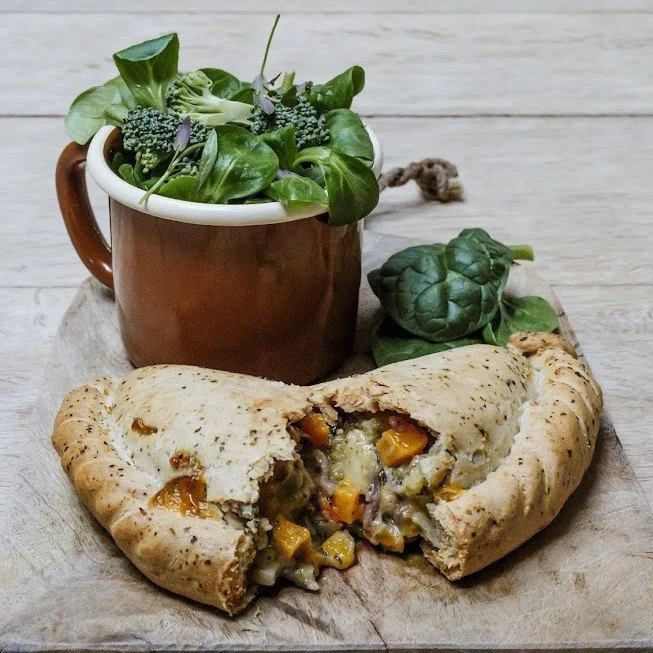
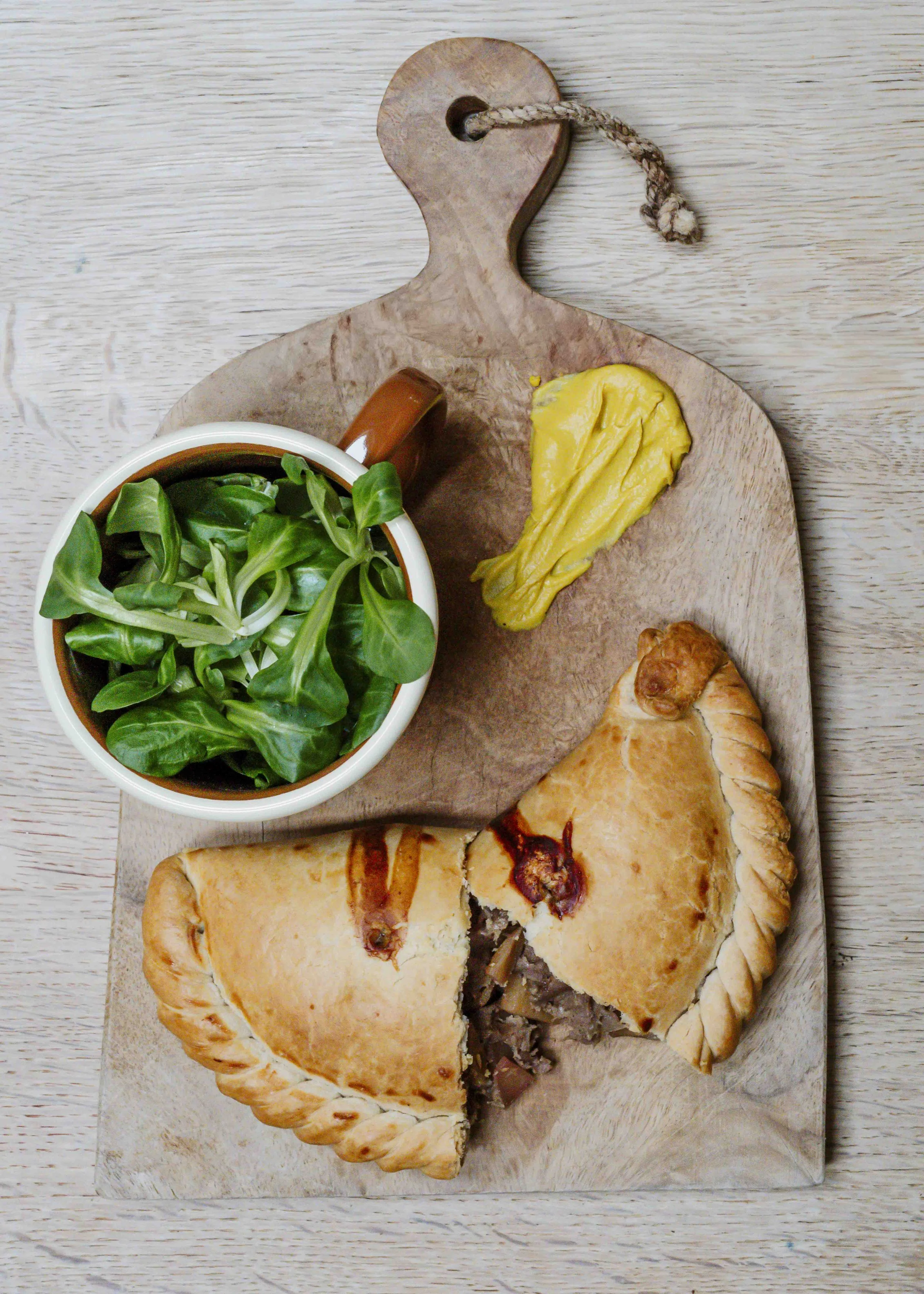
That practicality is one reason the historical record rings true. Foods Pasties by Post that survive across centuries usually solve a problem elegantly. The Cornish pasty did that. It fed people who needed something self-contained and filling. It could be carried. It held together. It was substantial enough to matter.
The miner story, and how to handle it carefully
No discussion of Cornish pasties stays away from the crimp for long. One widely repeated explanation is that the crimped edge acted as a handle for tin miners, allowing them to hold the pasty without touching the filling, and then discard the crust. Government material links that story to arsenic contamination in tin mines. The official product specification is a bit more cautious and presents it as one of several traditional stories about the shape.
That careful wording is worth preserving. Too often, historical food writing turns a good story into a hard fact without enough evidence. Here, the sensible approach is to treat the crimp explanation as part of tradition, and to acknowledge that official material frames it with some restraint.
That does not make the story less meaningful. Traditional foods often carry explanations that sit somewhere between lived memory and neat documentation. The point is not to flatten them into certainty when the evidence is presented more modestly. If anything, that honesty strengthens the wider case. The pasty does not need exaggeration to be compelling. Its history is already strong.
What 1808 tells us about continuity
The most valuable thing about the 1808 record is not the date itself. It is what the date implies about continuity. By the time a food enters an agricultural survey as part of a region’s life, it usually has roots beneath it. It belongs to households, to work patterns, to local expectation. It is known.
That matters when we think about heritage in the present. A dish becomes meaningful not only because it is old, but because it stayed in use. The official material emphasizes long continuity in local life and wider food heritage in Cornwall. That is a stronger claim than mere age. Plenty of recipes appear briefly and vanish. The Cornish pasty endured.
There is also something very Cornish about that endurance being tied to labour. The official specification points directly to working families, miners, and farmworkers. This was not primarily a ceremonial food in the sources you have here. It was everyday nourishment. That makes a difference to how we read the 1808 evidence. We are not looking at a curiosity or elite delicacy. We are looking at a food integrated into ordinary life.
In my experience, foods with that kind of background are usually the ones people feel most strongly about when they shop from a distance. They are not chasing novelty. They are trying to reconnect with something dependable, regional, and recognisable.
What this means when you order cornish pasties by post
The online food trade has changed how regional specialties travel. You no longer need to be in Cornwall to buy one, and that is convenient, but it can create a gap between product and context. A pasty arriving by courier is a very different experience from buying one in Cornwall, yet the protected name helps bridge that gap.
If you are ordering cornish pasties by post, the historical record gives you a useful way to think about value. You are not simply purchasing pastry and filling. You are buying into a food tradition Pasties by Post that official records connect to Cornwall over centuries, with documentary support that includes 1808 and a formally protected status in modern law.
That does not mean every online purchase will feel identical, because posting food always introduces practical variables. Timing matters. Packaging matters. Freshness on arrival matters. Even so, the core point remains. Authenticity begins with origin and specification, not with glossy storytelling.
A sensible buyer will usually Cornish Pasties Delivered want to check a few things:
- Whether the product is actually sold as a protected Cornish pasty.
- Whether it is made in Cornwall.
- Whether the traditional core elements are present, especially the D-shape and classic filling.
- Whether the seller is clear about what is being offered, rather than relying on vague heritage language.
That short checklist is more useful than pages of romantic copy. The strongest claims are the ones that can be plainly stated.
Tradition, change, and the question of a vegan cornish pasty
This is where modern buying habits meet a very old food tradition, and it is worth being precise. The official sources in hand describe the traditional Cornish pasty filling as beef, potato, onion, and swede or turnip, enclosed in a D-shaped pastry crust. The protected name applies only to pasties made in Cornwall and matching the registered specification.
So where does that leave a vegan cornish pasty? Based on the verified facts here, the traditional specification is clearly meat-based. That means anyone using the phrase should pause and check exactly what is being sold and how it is described. A vegan pasty may well be inspired by Cornish style, sold by a Cornwall-based bakery, or shaped in a similar way, but the protected and traditional definition given in official sources is not vegan.
That distinction matters for shoppers, and frankly it matters for producers too. There is room for adaptation in food culture, but clarity is essential. People with plant-based diets deserve honest descriptions, and heritage foods deserve accurate ones. The tension between tradition and dietary change does not need drama. It just needs clear labelling and a bit of respect for both sides.
I have seen this confusion happen with many protected foods. Once a product becomes widely loved, people try to stretch the name to cover every variation. Sometimes that is harmless shorthand. Sometimes it muddies the waters badly. Here, the cleaner approach is to recognise that a vegan option can exist in the broader market without rewriting the official, traditional definition of a Cornish pasty.
Why oral tradition matters as much as the documents
One detail in the official specification deserves more attention than it usually gets: recipes were often passed down orally. That line explains a great deal about why documentary evidence appears in the pattern it does.
Home cooking, especially in working communities, is often under-recorded. The foods people rely on every week can leave fewer formal traces than fashionable dishes written up in books. Instructions live in repetition. Amounts are judged by eye. Methods are corrected in the act of making. A mother shows a daughter, a neighbour demonstrates a fold, a household repeats what works.
That is one reason the 1808 record should be read alongside the broader statement that the Cornish pasty belongs to 16th and 17th century culinary heritage and was firmly established by the 18th century. Written evidence and oral tradition are not rivals here. They complement one another. One gives us fixed points. The other explains how a food can be older and more embedded than the surviving paperwork alone might suggest.
For readers interested in food history, this is one of the most honest parts of the Cornish pasty story. It avoids the trap of pretending every stage of a dish’s life was perfectly documented. Few traditional foods enjoy that luxury.
The shape of identity
The D-shape, the filling, the Cornish origin, the status as a sustaining food for workers, all of these features add up to more than a recipe. They create identity. That identity is exactly why the protected name matters and why the historical references carry weight.
There is a practical lesson in that for modern shoppers. Not every authentic food experience depends on novelty or endless variation. Sometimes the pleasure comes from restraint, from a product staying recognisable over time. A Cornish pasty does not need to be reinvented every season to remain relevant. In fact, its appeal is closely tied to the fact that it has held together as a distinct thing.
When people buy cornish pasties online, some are driven by memory, some by curiosity, some by convenience. Underneath all three is a wish for specificity. They do not want just any pasty. They want this one, with this heritage, from this place.
Reading the past through what survives
If you only had one fact about the Cornish pasty, 1808 would not be enough. But placed where it belongs, alongside official recognition of earlier heritage, centuries of continuity, and a modern protected designation, it becomes quite powerful.
It tells us that by the early 19th century the Cornish pasty was already visible in the written record as part of Cornwall’s food life. It supports, rather than creates, the claim of tradition. It also fits the broader official picture of a food shaped by ordinary use, preserved through oral transmission, and bound to the needs of working families.
That is why the date still matters when people order from a website today. Online retail can make everything look equally new, equally branded, equally detached from place. The Cornish pasty resists that flattening. Its legal protection says the name belongs to Cornwall and to a defined specification. Its historical record says the association runs deep. The 1808 reference is one of the clearest written signals of that depth.
For buyers, that means the best online choices are usually the ones that respect both the product and the story. They do not need to overstate. They simply need to be accurate. Made in Cornwall. True to the protected form. Honest about what is traditional and what is not.
That might sound like a small thing in the age of overnight delivery, but it is actually the whole point. Some foods travel well because they were always meant to. The Cornish pasty, portable, durable, and nourishing, has been doing that in one form or another for a very long time. The records from 1808 help prove it. The protected name helps preserve it. And the person ordering one from a laptop this evening is part of that long line, whether they realise it or not.
Phat Pasty Co
Unit 7
Apollo Business Park
Ironstone Lane
Wroxton
Oxfordshire
OX15 6AY
Website: https://www.phatpasty.com
Tel: 07485 011664